01Crack or split
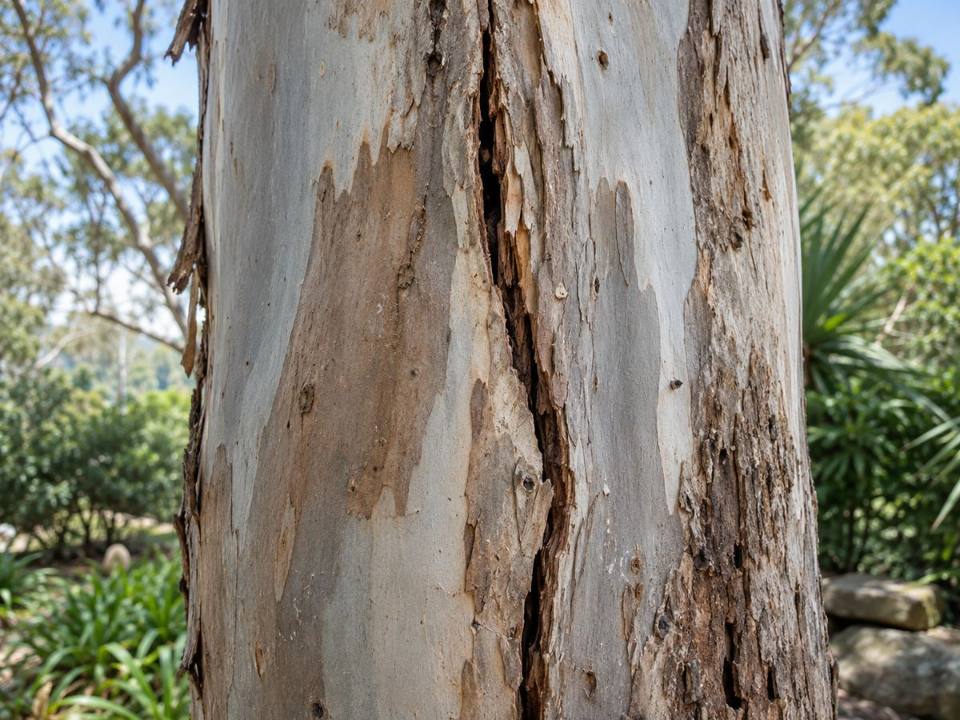
A crack or split can show that wood fibres have separated or that a union is under stress. Compare the photo with the location, shape and extent of what you can see on your tree. A small surface crack can have very different significance from a deep crack through a major stem or branch union. Recent opening, movement or a crack beside decay warrants professional assessment.
02Two main stems
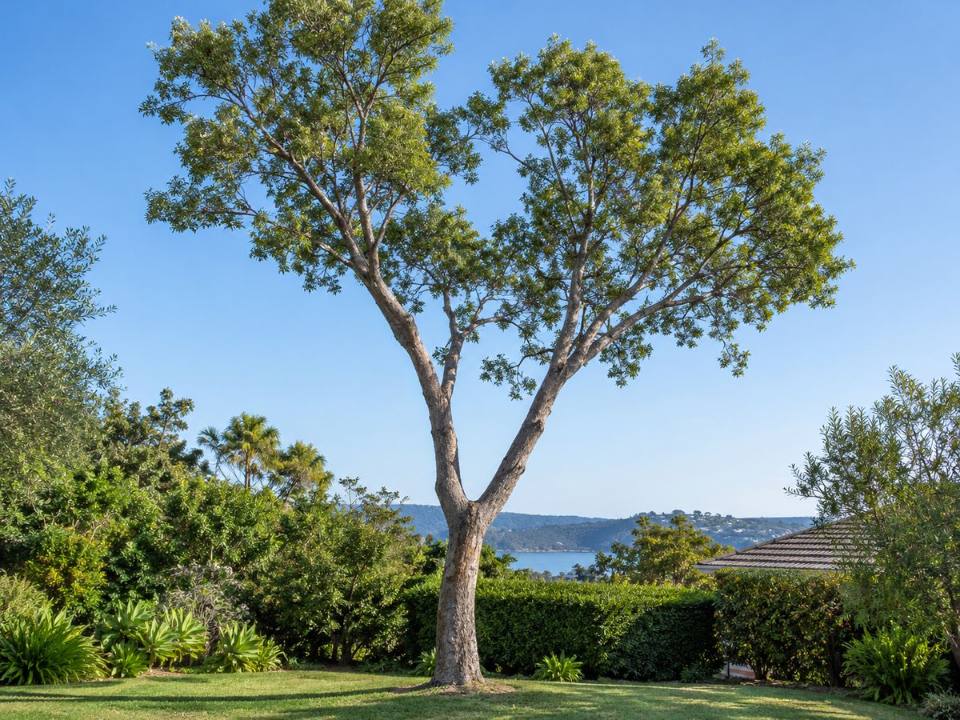
Many trees naturally develop two or more dominant stems. This is not automatically a defect. The important visual area is the union where the stems meet. Look for a narrow attachment, inward-growing bark, cracking, separation or signs of previous movement.
03Included bark
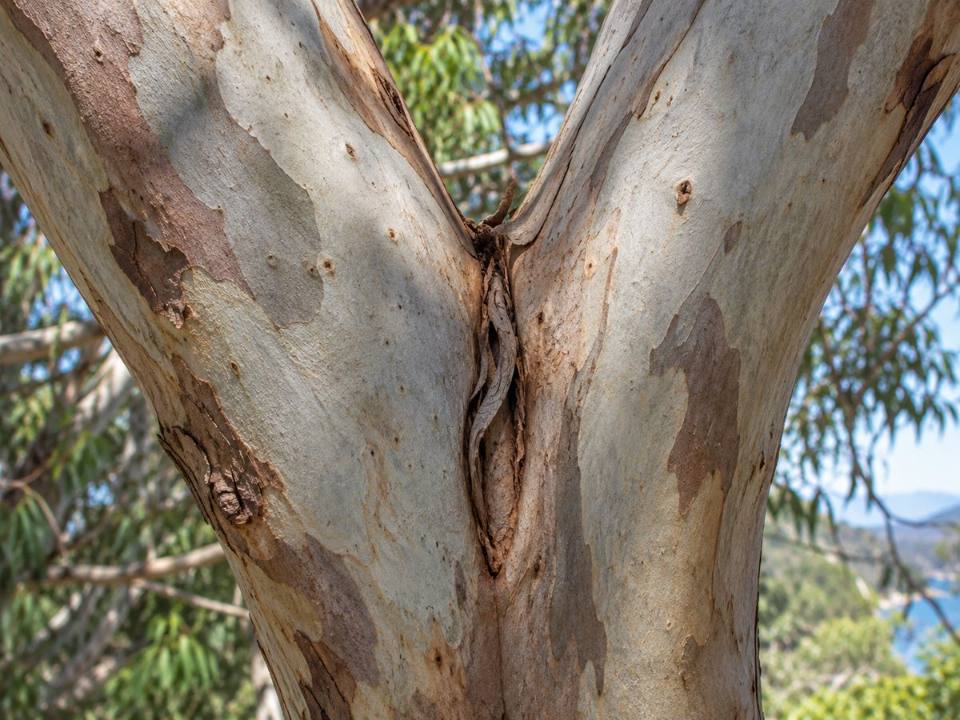
Included bark occurs where bark becomes enclosed between adjoining stems or branches as they grow. It can reduce the amount of wood connecting the union. Compare the photo with the junction on your tree, particularly if there is also cracking, separation or heavy crown growth above the union.
04Cavity or hollow
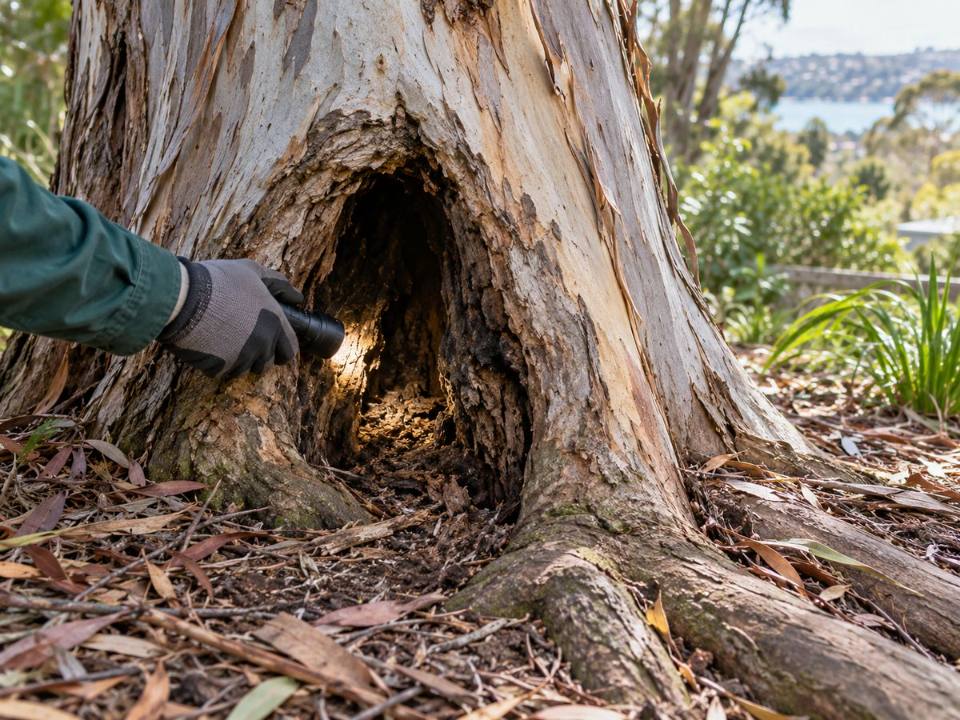
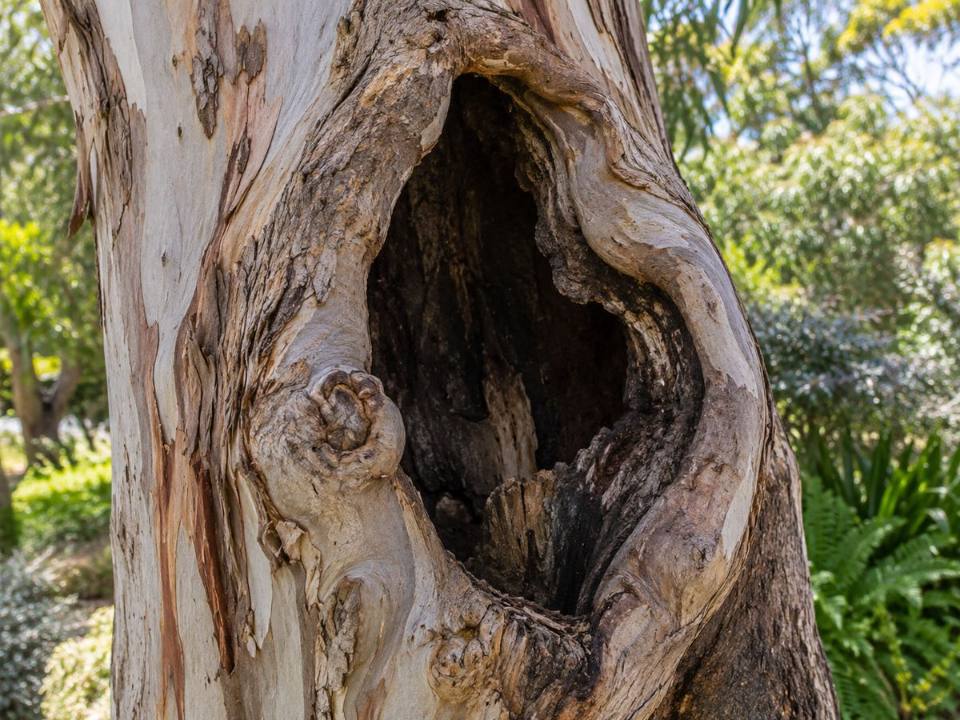
A cavity or hollow is a visible opening in the trunk or branch, often associated with an old wound or internal deterioration. Trees can continue growing around hollows for many years. The photograph can help you recognise the feature, but the amount and distribution of remaining sound wood cannot be determined from appearance alone.
05Fungal bracket or mushroom
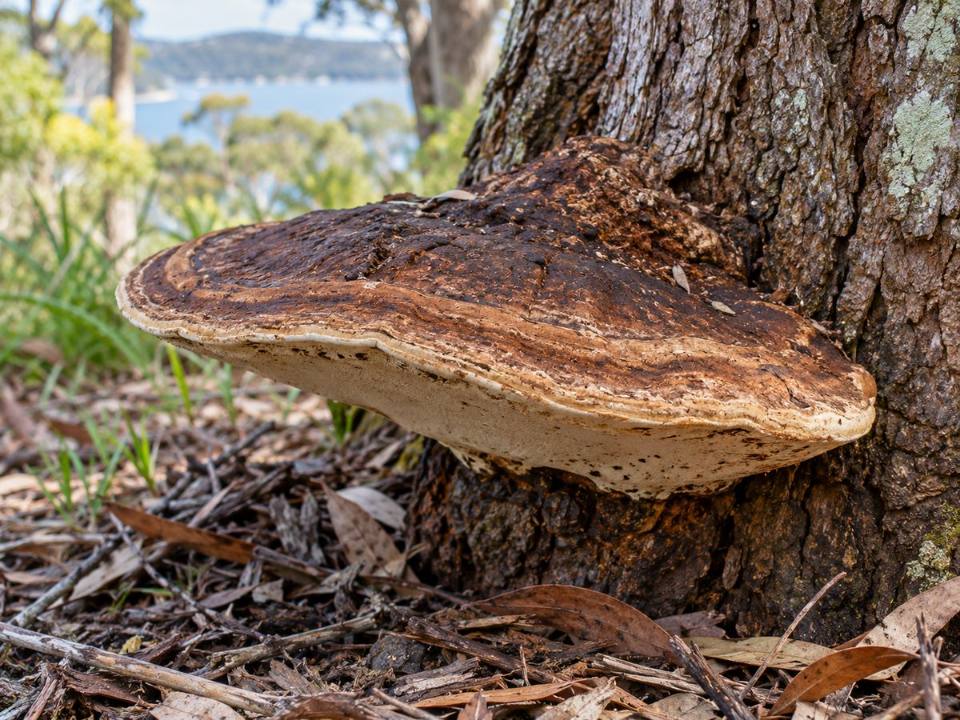
Fungal fruiting bodies can appear as mushrooms, brackets or shelf-like growths on the trunk, around wounds, on woody roots or near the base. Their presence is worth investigating because some fungi are associated with wood decay. Photograph the fruiting body and its exact location before it disappears or is removed.
06Ground or root-plate movement
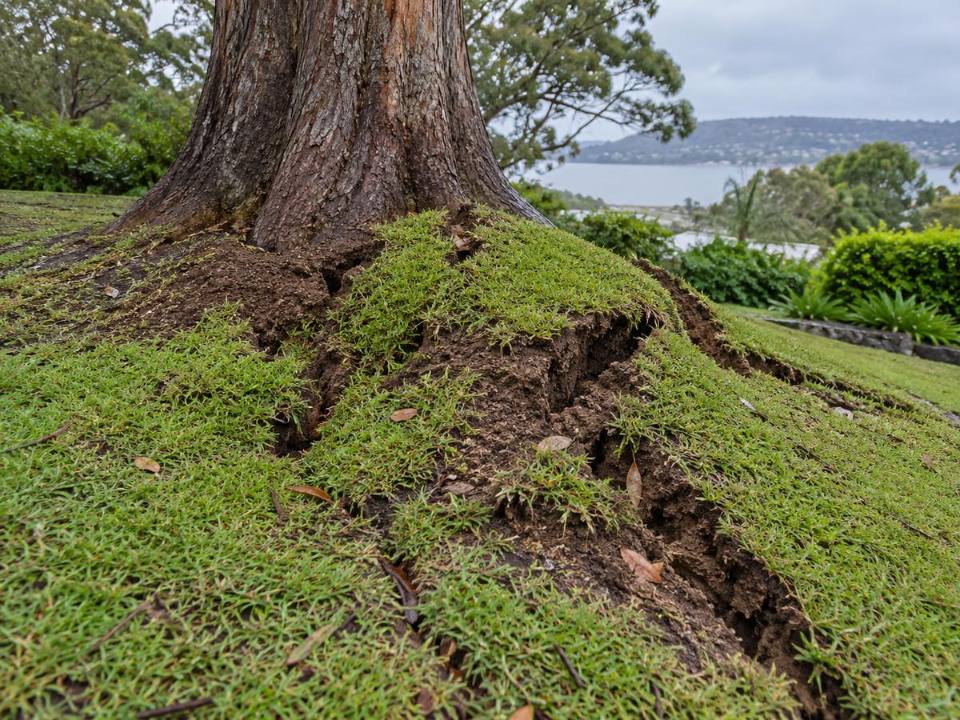
Fresh lifting, cracking or movement of soil around the base can indicate movement of the root plate. Compare the photo with recent changes around your tree rather than long-standing raised roots. New movement after strong wind or heavy weather should be treated seriously and assessed promptly.
07Cut or damaged roots
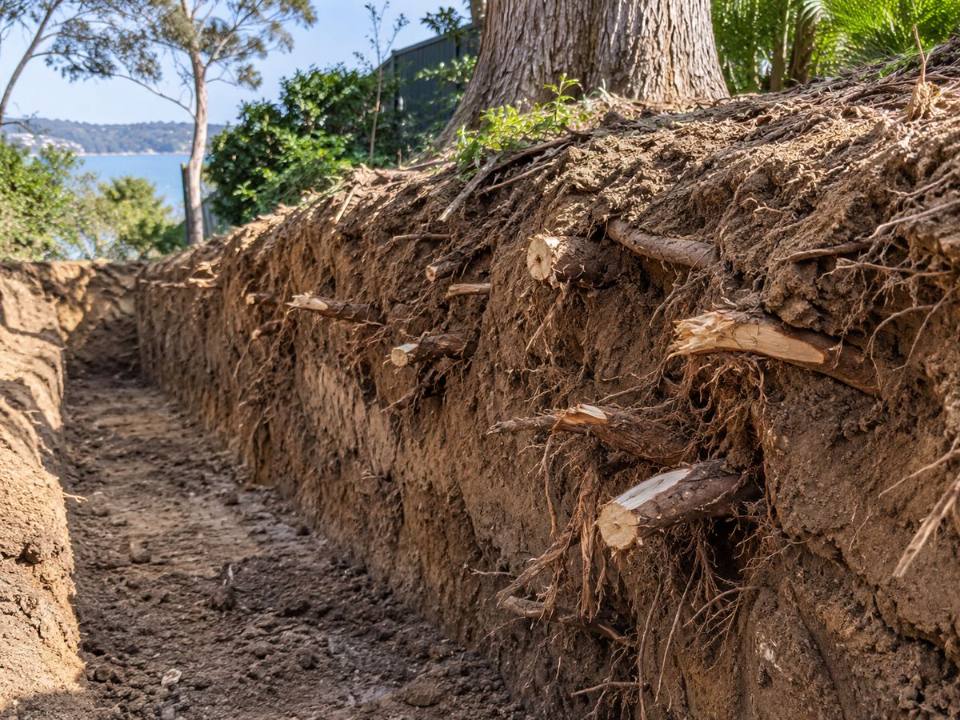
Tree roots may be cut, crushed or exposed during excavation, trenching, driveway work or construction. Look for fresh cuts, torn roots, exposed woody roots or recent excavation close to the trunk. The significance depends on root size, location, number of roots affected and the remaining root system.
08Sudden lean
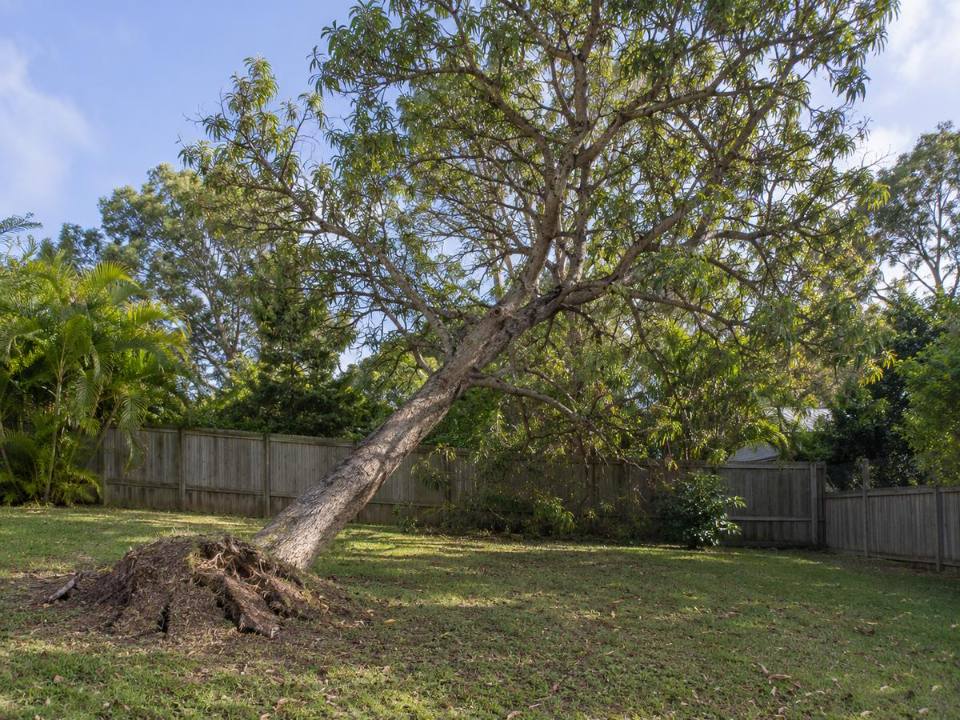
A tree that has grown with a lean for many years is different from a tree that has recently changed position. Compare the photo with your tree and look for a new or increasing lean, lifted soil, cracking around the base or recent root disturbance. A sudden change following wind or rain warrants prompt assessment.
09Roots or tree on a steep slope
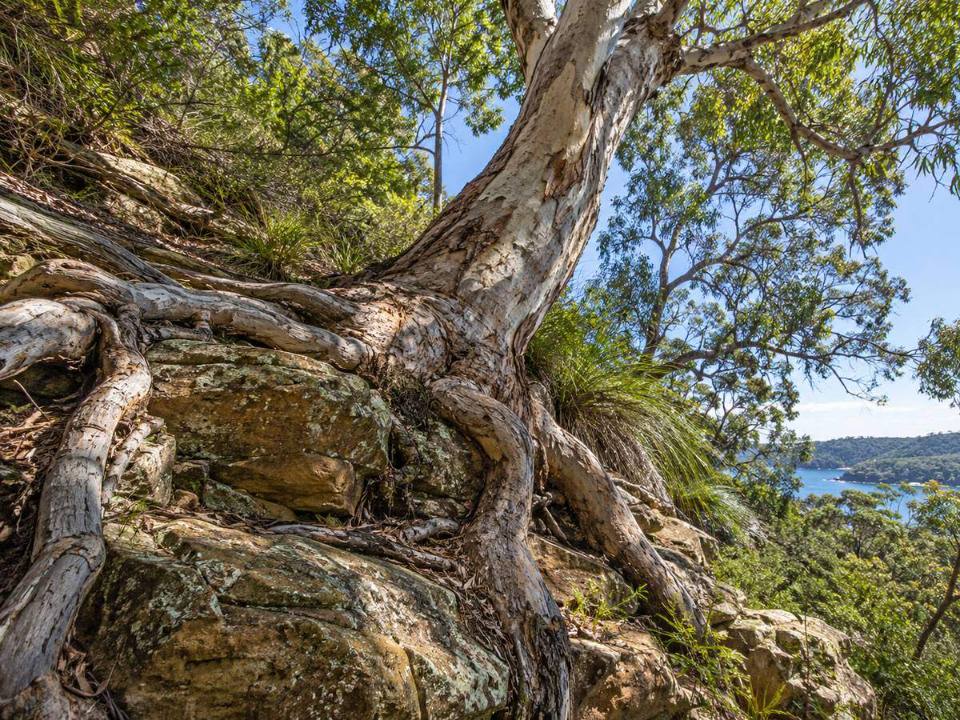
Trees on steep or rocky sites can develop unusual root forms as they adapt to soil depth, rock and slope. Exposed roots or an angled trunk do not automatically mean instability. Look for recent erosion, soil movement, damaged roots or a change in the tree's position. This is particularly relevant on steep Northern Beaches properties.
10Large dead or hanging branches
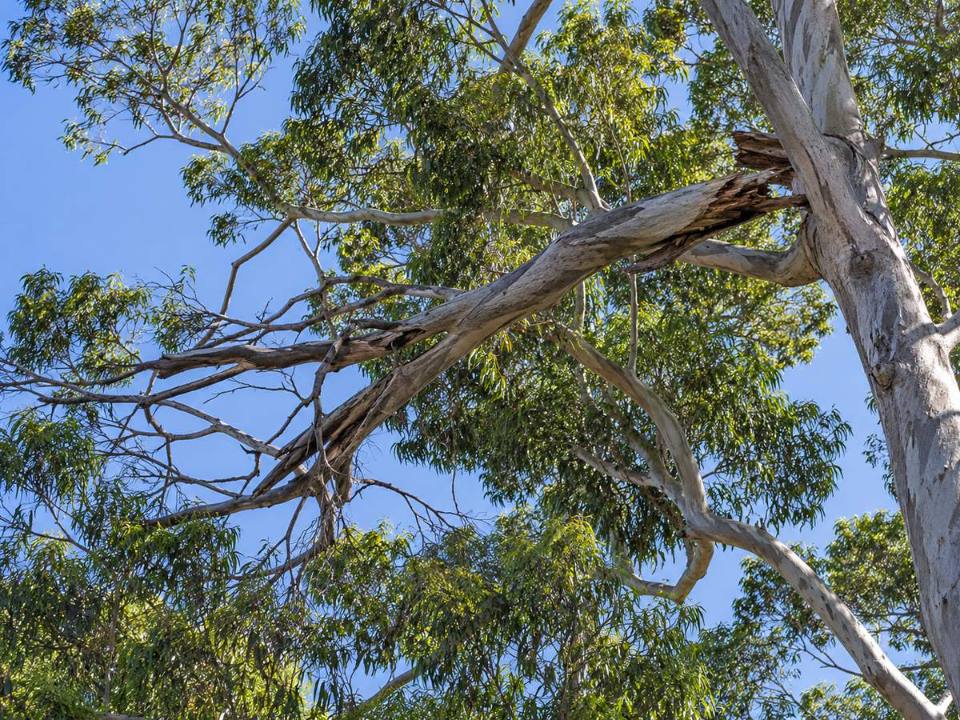
A living tree can contain dead branches. Compare the photo with what you can see in the canopy: leafless limbs, broken branches caught in other branches, bark loss or a branch hanging over an occupied area. Size, height, condition and what is underneath the branch all affect its significance.
11Previous major branch failure
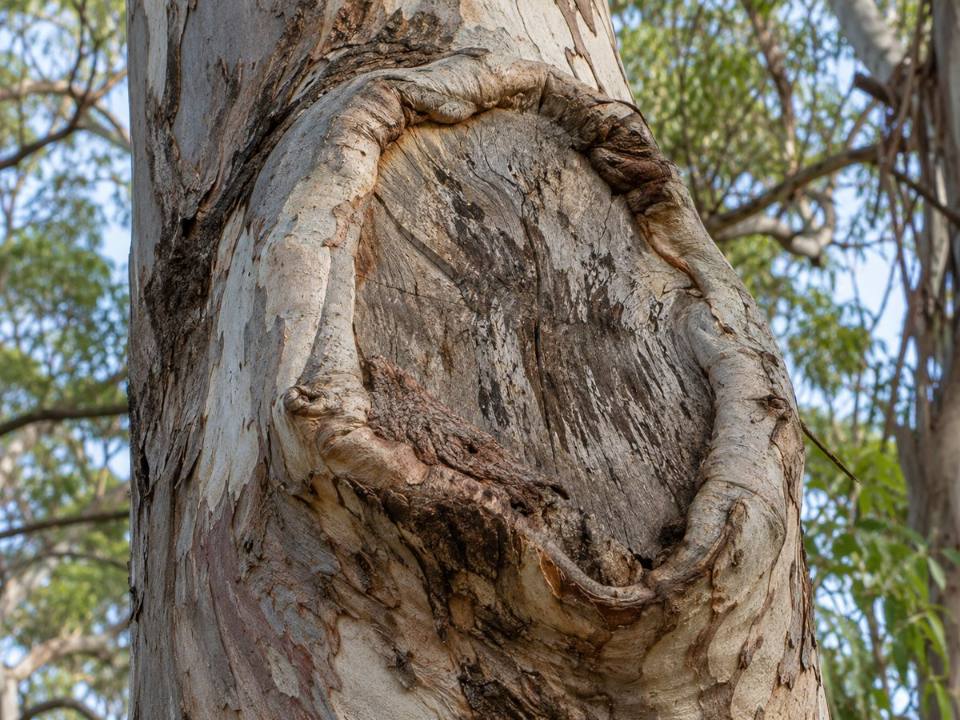
A large previous branch failure leaves a visible wound and can change the loading of the remaining crown. Look at the failure surface and whether similar branch unions remain elsewhere in the tree. One previous failure does not automatically mean the rest of the tree will fail, but it is useful evidence when assessing structure.
12Topping damage or regrowth
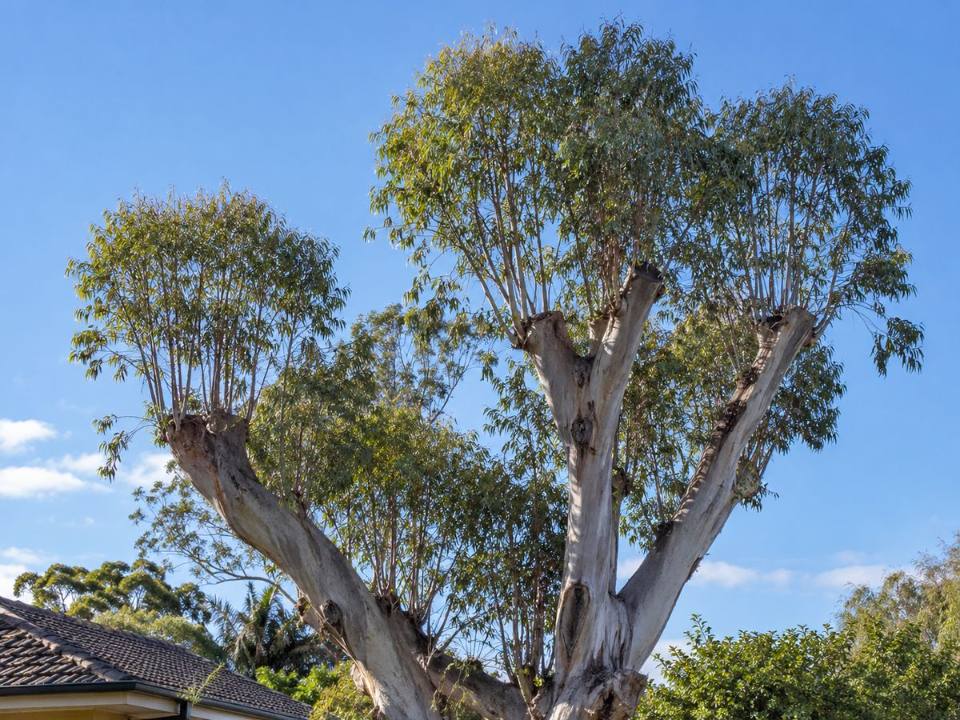
Topping removes substantial parts of the crown by cutting branches or stems back to inappropriate points. The tree may respond with vigorous shoots around the old cuts. Compare the photograph with clusters of upright regrowth and old large pruning wounds. Rapid regrowth does not necessarily mean strong attachment.
13Crown dieback
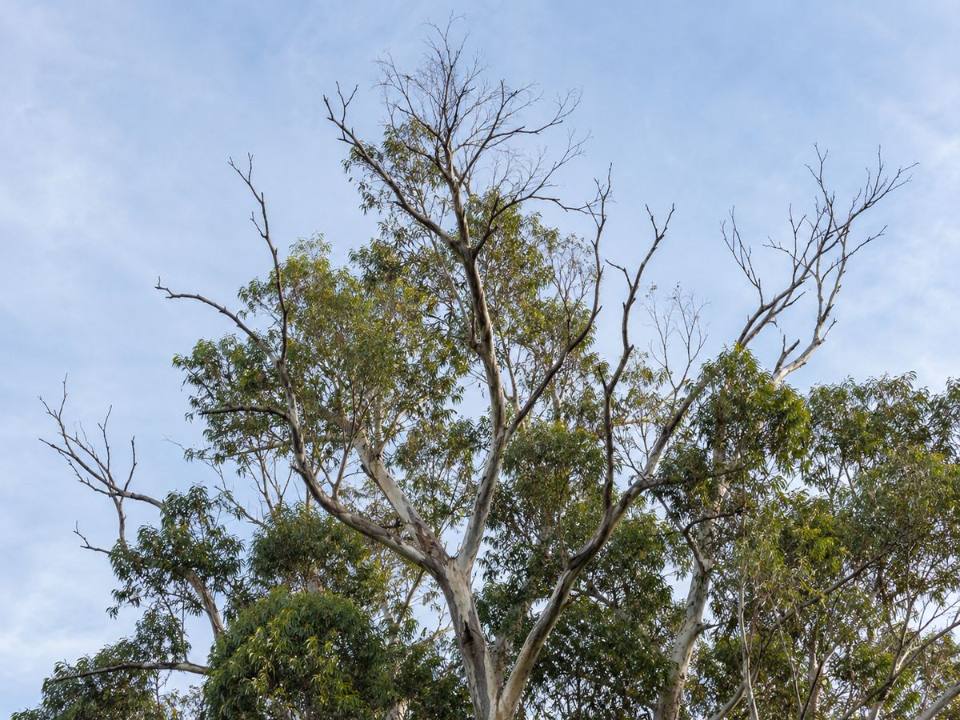
Crown dieback appears as thinning foliage, dead tips or sections of canopy that are declining while other parts remain active. It is a visible sign that something has changed, but it does not identify the cause by itself. Health and structural stability are not the same thing.
14Tree contacting a wall or structure
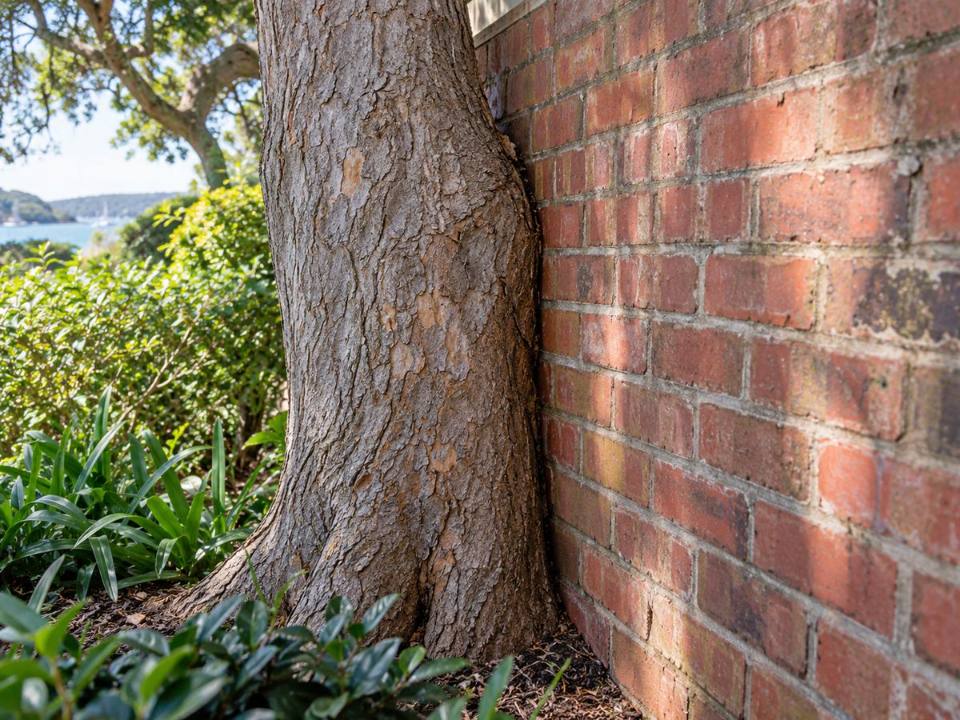
Direct contact between a tree and a wall, building, paving, driveway or service is easy to see, but contact alone does not prove that the tree is causing structural damage or that removal is required. Compare the visible contact point, then consider whether there is actual damage, manageable clearance or a root conflict requiring investigation.
15Termites
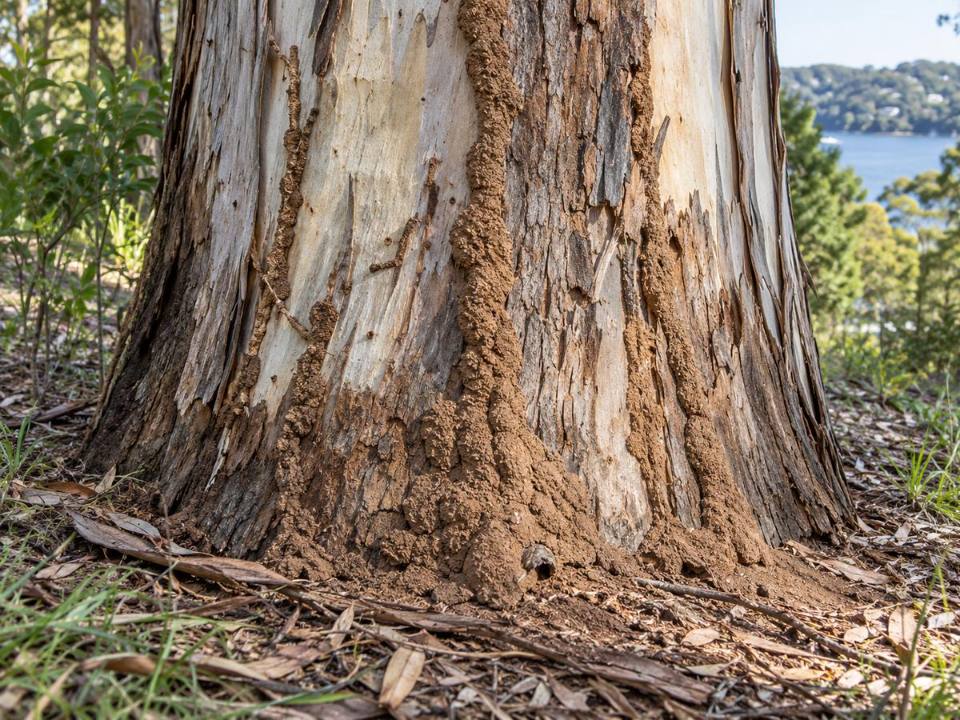
Termite activity may be visible as mud tubes, galleries, damaged wood or activity around wounds and the base of the tree. What is visible externally may not show the full extent of internal involvement. A photograph can help identify suspected termite activity, but the tree's remaining structure and the significance of any internal damage require proper assessment.