AQF Level 5 Consulting Arborists across the Northern Beaches
Northern Beaches Tree Permit Services logo

Tree Pruning Guidelines Northern Beaches

How much can I prune without a Council permit?

Northern Beaches Council allows reasonable pruning of up to 10% of a tree's canopy within 12 calendar months without a Council permit, provided the pruning complies with AS 4373-2007. That doesn't mean every tree should be pruned by 10%.

Good pruning is about removing what is necessary without unnecessarily damaging the tree.

  • AQF Level 5 Consulting Arborists
  • QTRA & TRAQ Qualified
  • 32+ Years' Experience
  • Council Pathway Checked First
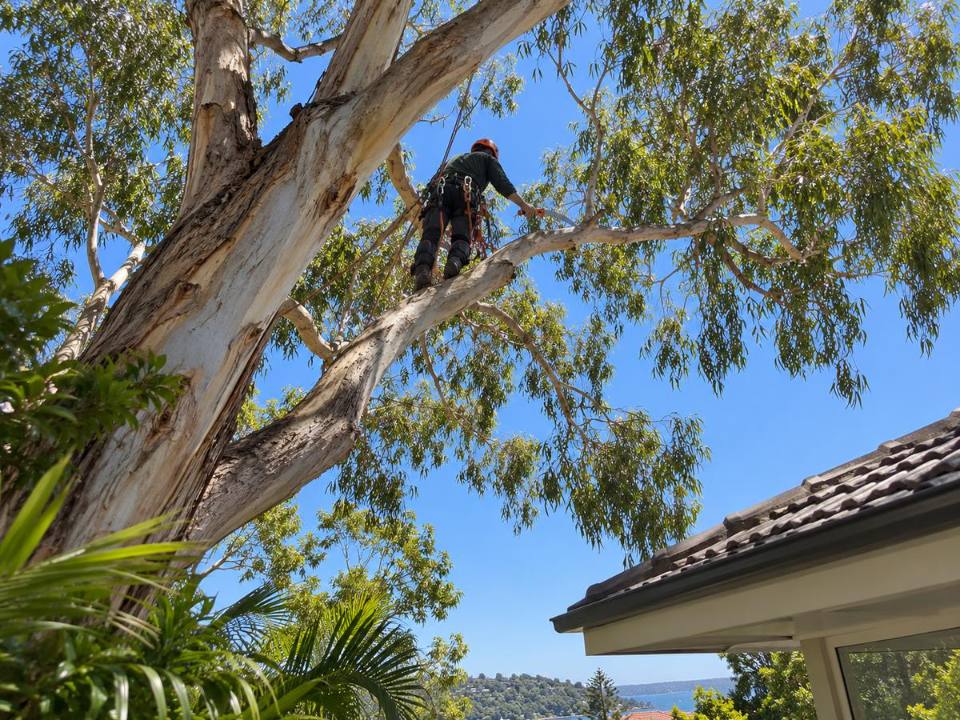
Arborist selectively pruning a eucalypt beside a home

Can I prune my tree without a permit?

Quick answer

Northern Beaches Council allows reasonable pruning of up to 10% of a tree's canopy within 12 calendar months without a Council permit, provided the pruning complies with AS 4373-2007. Council also allows removal of deadwood and of mistletoe or other parasitic plants, and will not permit topping or lopping.

10% is a Council threshold, not a pruning target. The exemption covers reasonable pruning up to 10% within 12 months, but the amount appropriate for a particular tree may be less.

Is it my tree?

This page covers trees on private property. If a tree is on public, Council-managed land, report it to Council rather than arranging private pruning. Council's arborists will assess the tree and recommend what work can be undertaken. See Council's public-land tree page.

What does 10% canopy pruning mean?

  1. Reasonable pruning

  2. Up to 10% of the canopy

  3. Within 12 calendar months

  4. In accordance with AS 4373-2007

The Council threshold concerns canopy pruning, and the work still has to be reasonable and carried out in accordance with AS 4373-2007. It does not mean taking 10% off the height, 10% off every branch or cutting the whole crown back evenly.

Do not start with a percentage and then look for branches to remove. The pruning objective should drive the work: one defective branch, limited clearance from a building, deadwood, or a specific structural or branch conflict.

Up to 10% canopy pruning does not mean removing 10% from the top of the tree.

RemovedOriginal crownSelective pruningUp to 10% of the canopy,chosen branches onlyToppingStems cut back to stubs.Not permitted by Council

What does AS 4373-2007 mean?

AS 4373-2007 is the Australian Standard, Pruning of amenity trees. Council requires permit-free pruning under its 10% provision to follow it, and will not permit pruning contrary to it.

For a homeowner the important principle is that good pruning is selective: particular branches are chosen for a defined objective, considering why the branch is being removed, where the cut is made, branch size, species, condition and how the tree is likely to respond.

What Council allows, may permit and will not permit

Council's private-land page sets out the permit-free provisions, the pruning it may permit and the pruning it will not permit.

Pruning without a permit

  • reasonable pruning up to 10% of the canopy within 12 calendar months, in accordance with AS 4373-2007
  • removal of deadwood
  • removal of mistletoe or another parasitic plant from a tree
  • vegetation work authorised under other legislation, such as lawful work under the NSW 10/50 scheme

Council may permit

  • pruning that is not detrimental to the tree's health and complies with Australian Standards
  • maintenance pruning of dead, diseased or dying branches
  • selective pruning of branches causing conflict, such as building encroachment
  • root pruning to reduce damage to built and natural structures
  • pruning for service lines, vehicle sight lines and road requirements

Council will not permit

  • pruning contrary to AS 4373
  • pruning beyond what the particular species will tolerate
  • lopping or topping
  • alteration of soil levels within a tree's root zone
  • tree work for emotive reasons

Dead branches. Council permits the removal of deadwood without a tree permit, which matters where dead branches hang over houses, driveways, pedestrian areas or pools. Substantial deadwood developing unexpectedly is worth understanding: see tree health and safety assessments.

Trees, native vegetation and bushland are also protected under Council's Development Control Plan, and consent is required to clear understorey vegetation. Hedges can follow a different Council pathway. Council gives figs as an example of pruning beyond what a species tolerates: figs pruned by more than 10% are predisposed to sunburn. The Council maximum is not necessarily the biologically appropriate amount for an individual tree.

Needing more than the permit-free allowance does not automatically mean the pruning cannot happen. It may mean a Council permit is required, made through the Tree Removal and Pruning application.

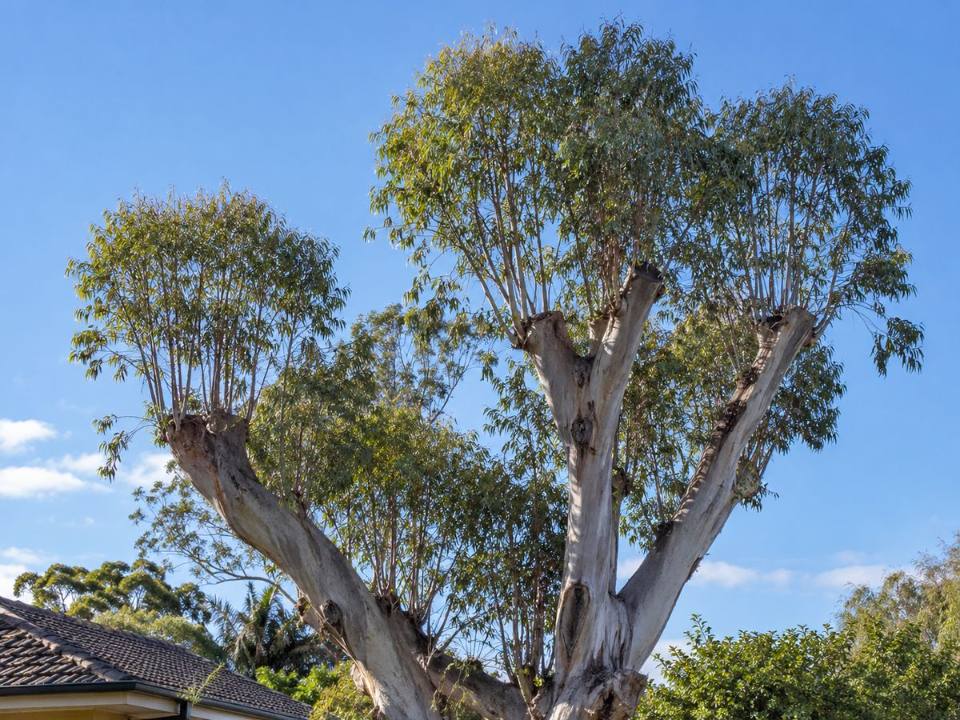
Topped tree with vigorous regrowth around old cuts

Topping: why cutting the top off doesn't solve the problem

Topping generally involves cutting substantial branches or stems back to unsuitable points rather than pruning to appropriate branch unions. Council lists requests for lopping or topping among the pruning it will not permit. Some trees produce vigorous new shoots around old cuts, but fast regrowth does not necessarily mean good structure.

Homeowners sometimes ask for a large tree to be “cut down by half” because of its height. Height by itself is not a defect. The right question is: what problem are we trying to solve, and what pruning, if any, is appropriate?

Why is the position of the cut important?

A pruning cut is a wound. A tree does not heal in the way human skin does. It responds through growth and biological processes around the injured area, so the location and quality of the cut matter.

A poor cut can unnecessarily increase the area of injury, and unnecessarily large cuts should not be treated as routine maintenance.

Branch bark ridgeStub cutlikely to decayBranch collarCorrect cutjust outside the collarFlush cutremoves the collar

Houses, neighbours, roots and development

Can I prune branches away from my house?

Potentially. Minor compliant pruning may fit within the permit-free allowance, and for more substantial conflicts Council identifies selective pruning for building encroachment as work it may permit. The objective should be reasonable clearance, not “cut everything back to the boundary”, because one-sided pruning can substantially change crown form and loading.

Can I prune my neighbour's tree?

Council states it does not have the authority to act in disputes between neighbours, and that the Land and Environment Court of NSW, under the Trees (Disputes Between Neighbours) Act 2006, is the only authority that can resolve them. Even where branches cross a boundary, protected-tree controls and pruning standards can still be relevant.

Can roots be pruned?

Sometimes, but root pruning is not ordinary DIY pruning. Council lists root pruning to reduce damage to built and natural structures among pruning it may permit. Roots contribute to tree function and anchorage, so cutting one can affect stability and condition, and near development it may have wider impacts. It may need professional assessment. Do not cut a significant root simply because it is visible or close to a structure.

What about pruning around development?

Pruning required for construction is a different context from ordinary maintenance. An otherwise available pruning exemption may not override a development consent condition requiring a tree or hedge to be retained. Pruning needed to make a design work should be assessed as part of the development arboriculture process. See DA arborist reports.

Does pruning make a dangerous tree safe?

Sometimes pruning forms part of risk management, but not every structural problem can be solved by removing branches. If the concern is a crack, cavity, fungus, root movement, sudden lean or previous failure, start with the tree warning signs guide. If removal may be the more appropriate outcome, see tree removal.
Do I need a tree pruning permit?

  1. What work is proposed?

    Define exactly what problem the work is meant to solve.

  2. Does a permit-free provision apply?

    Check the 10% allowance, deadwood and other exemptions, and compliance with AS 4373-2007. The percentage alone is not enough.

  3. Are there other controls?

    Development consent, biodiversity, protected vegetation and site-specific requirements.

  4. Is more extensive pruning required?

    A Council Tree Removal and Pruning Application may be necessary.

  5. Prepare a pruning specification

    Identify the branches or crown area involved and keep the work within the established scope.

Before you prune the tree

If you're unsure whether the work falls within Council's pruning exemption, check the pathway before pruning. Send us a photograph of the whole tree, photographs of the branches causing concern, the property address, what you are trying to achieve and any Council correspondence or approval conditions.

Many pruning jobs won't need an Arborist Report. Trees near powerlines or other electrical infrastructure may involve the network operator and are not ordinary homeowner pruning.

Frequently asked questions

Council's wording is up to 10% of the canopy within 12 calendar months. That does not mean a tree should automatically be pruned by 10% every year.

No. Council lists lopping or topping among work it will not permit, and permit-free pruning must comply with AS 4373-2007.

Trees on public, Council-managed land are Council's to manage. Report the tree to Council, and its arborists will assess it and recommend what work can be undertaken.

Not every minor pruning job needs an Arborist Report. Where the tree, the proposed pruning, a structural issue or the Council pathway is complex, professional arboricultural advice can establish an appropriate specification.

Official Council sources

Council requirements can change. Confirm current requirements with Northern Beaches Council before undertaking tree work.

Related pages

Need help with tree pruning?

We provide tree pruning advice across all five Northern Beaches Council wards, and can help establish whether the 10% provision applies, whether Council approval is required and whether a more detailed pruning specification is appropriate.

Call Now Get a Free Quote